An organized channel of my online thoughts and observations of design in both literature and the everyday environment of today’s culture.
January 30th, 2022
The Importance of Facebook’s New Identity and Logo for Meta
The idea and evolution of creating a reality where one can live a parallel life in the online atmosphere are quickly becoming a reality and have captured the attention of the world’s most influential people. Mark Zuckerburg, the CEO of Facebook, has recently addressed the change of his companies name to Meta in hopes of expanding their company across the Metaverse, a quickly expanding idealogy that consists of an online universe that closely correlates with the one we live in today.
Regardless of whether or not the metaverse is a concept one is interested in, the idea of the world’s largest social platforms changing their name and logo will turn heads dramatically. While Facebook, Instagram, WhatsApp, or any other platform that Meta owns will keep their same logo and identity branding, the new logo will appear on each of these widely used applications and websites.
With the new identity, the company is no longer tied and held down under the social media umbrella. Instead, the word and understanding of Meta itself invite modern change and fluidity between applications and online environments. As for the logo and actual design itself, the new blue infinity loop is illustrated to represent an “M” for the metaverse. The typeface remains the same as their 2019 rendition, and the logo is meant to be visually seen in both 2D, 3D, and motion. The logo animates across screen sizes, applications, and social settings, and relates back to the companies infamous blue tint.
Mark Zuckerburg and Facebook’s approach to a brand redesign is unique. Not only are the CEO and the social media goliaths changing their logo identity, but they have also taken advantage of a business model alteration to create a new and appealing visual image to depict a significant change. Having multi-billion dollar cooperation and business such as Facebook marks a point in design practice where brand identity and design goes beyond the visuals that are on the screen. Instead, design can be used to embrace change, alternate philosophies, and adapt to modern trends.
January 28th, 2022
THE UNFORTUNATE STYLE OF THE MODERN MOVIE POSTER


Throughout the history of pop culture, one would have a difficult time finding a better representation of a cultural influence other than movie posters. While posters, in general, are created as marketing ploys to obtain a larger profit, they have always held a particular essence in the cultural sphere. Movie posters, similar to music, or even the movies that they represent, offer a unique glimpse into the art of the medium. Yes, the poster and the artist tease the audience into building the desire to see the film. However, when done correctly, the poster can heighten the artistic nature and become iconic. Star Wars, Back to the Future, and Jaws are all films that are represented by posters that can be found on thousands of walls across the globe.
When it comes to modern movie posters, the use of photo editing and photo manipulation has overcome the marketing industry. The focus has shifted from highlighting an artistic rendition and symbolic nature, to a more photorealistic interpretation and combination of visual images and characters that often become messy and convoluted.
The poster shown above on the left is the recent official poster for the upcoming blockbuster, The Batman, where cutouts of the characters The Riddler, Batman, Penguin, and Catwoman (left to right) are layered on top of one another in a hierarchy fashion. Below the representative characters is more imagery from the film that acts as a base layer for the film’s typography and an official logo. On the right of the poster previously mentioned is another new poster for The Batman from Total Film, where they recently revealed new images of the film in a new marketing push leading up to the release on March 4th, 2022. In this rendition, the poster includes symbolism, layers of dramatic imagery, and introduces a heavy and dramatic black and red color scheme and tone. While this poster is not labeled as official and served a unique purpose for this specific magazine, the dichotomy between the two works represents how a dull modern approach to static marketing can easily be overshadowed by a dynamic, interesting, and unique approach to a film’s character.
2022 NBA All Star Jersey Controversy
January 28th, 2022
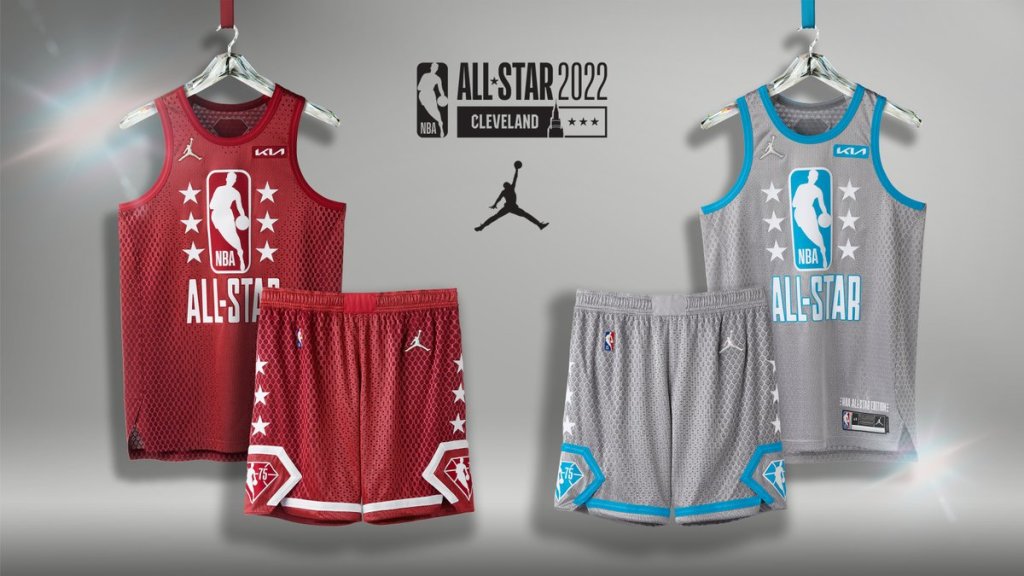
Typically within the basketball fandom, the reveal of the annual NBA all-star jerseys is highly anticipated and has since become a staple alongside the game itself. For the fifth year in a row, the NBA has partnered with the Jordan brand to design and produce the jerseys for the event. While Jordan Brand has created great, innovative, and creative jerseys in years past, they dropped the ball here in 2022.
In today’s culture, a response to a piece of art, design, or any other piece of a creative element comes fast and loud. With Jordan’s fifth installment of the all-star threads, the internet, but more specifically the NBA community is not happy, to say the least.
The NBA has released a statement revealing that the jerseys paying tribute to the classic All-Star uniforms from the late 1980s and early ‘90s. While yes, these do offer a sense of nostalgia to those that are fond of the past renditions, this modern take offers little to no evolution and instead gives the fandom a boring and convoluted structure. Below is the previous rendition that Jordan and the NBA are paying homage to in their new design.

The modern rendition of the jersey simply becomes deflated. The chosen color combinations, typography choices, and material come together to create a piece of merchandise and on-court apparel that lacks the classic and historic characteristics that the NBA All-Star game is notorious for.
Design Thinking Reading
Janurary 27th 2022 / Pages X–25, 34–73, 92–101
“Stop pretending there’s a difference between “online” and “real life”. Every aspect of our lives has an online component.”
Annalee Newitz
This quote from Annalee Newitz from page 18 of Designing Brand Identity stuck out to me while I was completing the assigned reading for the week. I believe that what Newitz is stating is a great representation of how the world of design, creativity, and even social life has become infected with digital influence. Not only has online social interaction eclipsed that of face-to-face communication, but the way that one sees and views creativity.
When speaking directly regarding the customer experience, the author constantly reminds us that the brand sellers need to advance their thinking past profit and sales, but instead to curate unique experiences. New ways to create experiences attract new customers, and new customers bring loyalty and diversity to your brand and company. Today, in order to achieve such success with experience for a brand, technology must be involved.
While I may challenge Annalee’s statement regarding the absence of difference between “online” and “real life”, I do understand the important point that she exclaims in which every aspect of a human’s life is somewhat derived or lifted from technology. Experiences, the art of designing a related moment that offers a unique opportunity for the consumer, is practically impossible today without the use of online resources. In order to successfully build a brand, one must accept the role of technology in the 21st century, but also acknowledge that an aspect of an online presence will be needed to be successful.
 Jeff Converse